Blog

  • “You should have kept in touch”


    Why I Was Afraid to Call My Uncle—and Why I Did Anyway

    “I don’t want him knowing where we moved.”

    We were preparing to move to a new apartment—one that was in better condition than our previous home. I had recently reconnected with my uncle, who was the closest thing I had to a parental figure in my life. However, my husband didn’t want my uncle to know where we lived. In fact, he didn’t even want me talking to him anymore.

    His reasoning was that I shouldn’t be hearing the teasing my uncle generally gave me. Granted, I didn’t really like being called things like an old heifer, but I had grown up with it and had learned to brush it off. Sadly, I complied with my husband’s request and stopped calling. I silenced a relationship that once brought familiarity and warmth.

    With few friends and little family connection, it was easy to isolate me. Looking back, I realize that the isolation didn’t happen all at once. It started with little things and sounded like love at first—protective, even. But over time, my world grew smaller, and the quiet control wrapped itself around me like a fog I couldn’t quite see through. What felt like caring slowly became confinement.

    It was a couple of years later when I finally stood up for myself and insisted that I be allowed to call my uncle. By then, he had moved, and I got his number from what was now his ex-wife.

    “You should have known this. You should have kept in touch with him,” she scolded when I first called her to ask for his number.

    I didn’t have the words to explain. How do you tell someone that fear dictated your silence? That you had spent years managing someone else’s feelings while your own heart withered in the background?

    I missed years with the one person who had truly cared for me during my childhood. I missed birthdays, conversations, laughter, and even his teasing—because even in that teasing, there was affection. There was memory. There was identity.

    Reconnecting with him was bittersweet. He was older, and life had changed, but he welcomed me without hesitation. In that moment, I felt a small piece of myself return—something I didn’t realize had gone missing. Calling him wasn’t just a catch-up. It was a quiet act of rebellion. A step toward healing. A declaration that I was still here, still worthy of connection, and still allowed to belong to more than just one person’s control.

    There’s a deep grief that comes with realizing how much was lost in the name of keeping the peace. But there’s also deep strength in reclaiming what matters to you—even if you have to start small.

    If you’ve ever been made to feel like having friends or staying in touch with family was wrong, please know this: that wasn’t love. Real love doesn’t isolate. Real love lets you grow, connect, and choose your own relationships.

    Healing takes time. And sometimes, it begins with something as simple—and brave—as making a phone call you were once afraid to make.


    You’re not alone.
    If you are in a relationship where you feel isolated, controlled, or unsafe, please know there is help available. You are worthy of safety, love, and peace.

    Need support? Here are some trusted resources:

    Take the next right step for your healing, however small it may be. Grace meets you right where you are.

    With heart and hope,
    Michaela Noelle Grace
    Founder of Rebuild Life with Grace
    rebuildlifewithgrace.org

  • This isn’t normal?

    This isn’t normal?

    I remember hearing a minister preach on signs of jealousy and malicious control in men. At first, I thought the minister had to be wrong, because I had been convinced that these signs were that my spouse was protective of me.

    I sat there frozen in my seat, feeling the slow unraveling of my reality. The minister spoke calmly, with compassion, but each example he gave struck a nerve. “He constantly needs to know where you are… he isolates you from your family… he twists your words to make you feel guilty… he calls it ‘love,’ but it feels more like fear.”

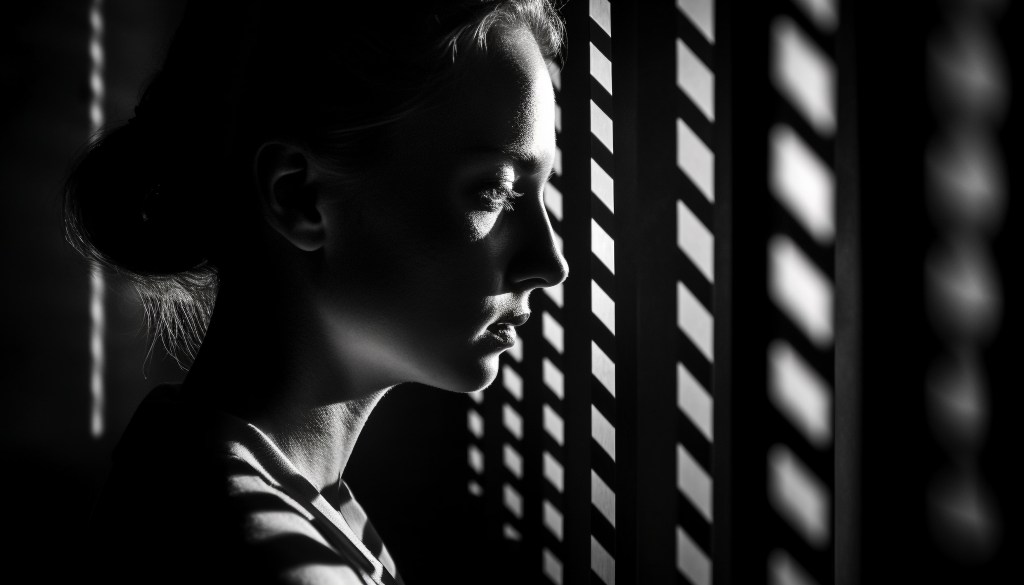
    Young adult woman in solitude, looking out window with sadness

    I had called it love too. I had believed I was being cherished—watched over—when I was really being watched, controlled, and cut off. It didn’t happen overnight. It was subtle at first: the questioning of my phone calls, the suspicion of my friendships, the discomfort I felt when sharing my dreams. But over time, the freedom I once had slowly disappeared under the weight of his “concern.”

    What I didn’t know back then is that real love does not smother. It doesn’t thrive on power or fear. Real love protects, yes—but it also respects. It makes room for growth, voice, and individuality. What I was living in wasn’t protection—it was possession.

    If you’re reading this and something inside you is stirring, I want to gently say: you’re not imagining it. If you feel small, silenced, or afraid in a relationship that claims to be loving, that’s worth paying attention to. You don’t owe anyone your silence. You deserve to live free, whole, and unafraid.

    I know how hard it is to unlearn the lies. To believe that what you thought was care may actually be control. But healing begins with truth. And truth, though painful, is the beginning of grace.

    You are not alone. There is hope. There is help. There is healing.


    You’re not alone.
    If you are in a relationship where you feel isolated, controlled, or unsafe, please know there is help available. You are worthy of safety, love, and peace.

    Need support? Here are some trusted resources:

    Take the next right step for your healing, however small it may be. Grace meets you right where you are.

    With heart and hope,
    Michaela Noelle Grace
    Founder of Rebuild Life with Grace
    rebuildlifewithgrace.org

  • “When will you be home?”

    “When will you be home?”


    “When will you be home?” he said angrily on the phone.

    Upset woman talking on her smartphone.


    “I-I told you it would be a couple of hours at least,” I responded, stuttering. “The kids are playing, and they haven’t seen each other in months.”

    It was supposed to be a peaceful afternoon—a rare playdate with one of my homeschooling friends, someone who understood the chaotic beauty of raising children while trying to hold onto slivers of adult conversation. Our kids were laughing, running, and reconnecting like no time had passed. But in the pit of my stomach, the joy was already turning sour.

    Because I knew what that voice meant.
    Because I knew I’d pay for this “freedom” later.
    Because this would be the last time I’d feel safe enough to plan something like this again.


    Looking back, I see now that it wasn’t just about a playdate. It was about control. Isolation doesn’t always come with locked doors or blocked phone numbers—it often comes dressed in subtle moments like this, where fear creeps in under the surface of something ordinary.

    That day should have been a breath of fresh air. Instead, I spent the drive home rehearsing explanations, hoping the kids’ laughter in the backseat wouldn’t remind him how long we’d been gone. I shrunk a little more inside, the way I always did after being made to feel guilty for simply living.

    It wasn’t the first time I canceled plans, and it wouldn’t be the last. Over time, I stopped reaching out. I stopped making new friends. I stopped saying yes to things that brought me life, because it was just easier—safer—not to risk the fallout. The isolation wasn’t immediate. It was slow. Strategic. A thousand tiny compromises I made to keep the peace.

    But each one chipped away at the person I used to be.


    I didn’t realize I was disappearing until there was almost nothing left of me.

    But healing began in those quiet, broken spaces—when the loneliness became too loud to ignore, and I dared to wonder if life could be different. It didn’t start with big, brave steps. It started with whispers of truth—soft reminders that isolation wasn’t love, that fear wasn’t safety, and that I wasn’t created to live this small.

    I started reconnecting with people slowly, carefully—testing the waters of trust. I journaled in secret, prayed with desperation, and clung to the hope that God still saw me, even when I couldn’t recognize myself in the mirror. Little by little, I began to say yes again—to myself, to my worth, to life beyond survival.

    Healing wasn’t linear. It was messy, sacred, and full of setbacks. But it was also holy ground. Each moment I chose to show up for myself became a stone in the foundation of the woman I was rebuilding.

    And I am still rebuilding—with grace, with grit, and with the quiet courage of someone who finally believes she deserves to be free.


    If you’ve found yourself slowly fading in the shadows of someone else’s control, I want you to know—you’re not alone, and this is not the end of your story. You were created for more than just surviving. You were created to live in freedom, in love, and in truth.

    Start small if you have to. Reach out. Speak up. Journal your truth. Pray the raw, unfiltered prayers. Healing begins with one brave choice—and you don’t have to make it alone.

    “The Lord is close to the brokenhearted and saves those who are crushed in spirit.”
    —Psalm 34:18 (NIV)

    With you on the journey,
    Michaela Noelle Grace


  • It Started Small

    It Started Small

    It started small. Over a pair of shoes, of all things.

    I used to be a runner. It was one of the few things that made me feel strong, free, alive. But he insisted that if I were going to keep running, I needed to wear high-top shoes. “To protect your ankles,” he said. I tried, but I couldn’t run in them—they felt heavy, unnatural. Eventually, I just stopped running.

    Then it was the books I read. The clothes I wore. The food I ate. Makeup, friendships, how I laughed, how I prayed. Bit by bit, my choices were no longer my own. Each small thing, on its own, might not have seemed like much. But together, they created a slow unraveling. The me I once knew began to disappear beneath layers of compromise, silence, and self-editing.

    Even in our wedding—what should have been a celebration of us—my voice was barely present. My input was overridden. My preferences erased. I didn’t know it at the time, but the ceremony was more than symbolic. It was a reflection of the story that was beginning to unfold: a life where his wants always came first.

    I wish I had known then what I understand now.

    Control doesn’t always shout. Sometimes it whispers. It hides behind “helpful advice,” behind concern that feels like protection—but costs your autonomy. It reshapes you until you forget the sound of your own voice.

    I’m still learning to hear mine again.

    This isn’t the part of the story where everything is fixed. I’m not out. I’m not free. Not yet. But I am awake. I’m paying attention. I’m rebuilding inwardly, even while things outwardly remain the same. I’m holding on to what I can—small pieces of myself, fragments of hope, glimpses of who I used to be and who I still am, deep down.

    And I’m writing. That, too, is a step. A quiet rebellion. A gentle remembering. A reminder that my story is still mine to tell.

    If you’re reading this and quietly nodding because it feels familiar—please know you are not alone. Your voice matters. Your story matters. And even if you’re not ready to leave, you’re allowed to begin healing right where you are.

    If you ever need someone to talk to, or if you just want to learn more about what emotional abuse can look like, help is available—safely, and confidentially.

    👉 Click here to visit The National Domestic Violence Hotline or call 1-800-799-7233.
    (They’re available 24/7, and there’s a “quick exit” button on their site for safety.)

    Be gentle with yourself. Every small act of remembering who you are is an act of strength.

    Be blessed and stay safe,

    Michaela Noelle Grace

  • Why I Haven’t Left Yet: The Silent Struggle You Don’t See

    Why I Haven’t Left Yet: The Silent Struggle You Don’t See

    Silouette of a discouraged woman looking into the distance

    I want to start by saying something that’s hard for me to admit:
    I haven’t left yet.

    I’m still here. Still trying to survive. Still hoping, praying, bargaining with God that something will change. And if you’re reading this and wondering how I can stay in something that’s breaking me—I get it. I ask myself the same thing almost every day.

    But the truth is, it’s not that simple.

    From the outside, things look relatively normal. But from the inside, it’s confusing. Manipulative. Subtle. It twists love into control and convinces you that the pain is your fault. That if you just tried harder, prayed harder, were more patient or submissive or forgiving—things would be different.

    I’ve told myself that more times than I can count.

    Some days I feel strong enough to leave. I pack a mental suitcase in my head. I play out conversations I might have. I imagine what it would feel like to breathe without tension, to sleep without fear. But then that voice in my head starts up again:

    “Where would you go?”
    “What if no one believes you?”
    “Maybe it’s not really abuse—maybe you’re just too sensitive.”
    “What if God is testing you to see how much you’ll endure?”

    I’ve stayed because of fear. Because of guilt. Because of what people at church might think. Because I don’t want to “break the family.” Because I’m scared of the unknown. Because part of me still believes the version of me he created—someone small, someone unlovable, someone who can’t do life on her own.

    But I’m starting to see through the cracks.

    I’m starting to remember that I used to laugh freely. That I used to have dreams. That there is a version of me buried beneath the silence and shame—one who hasn’t given up completely.

    I don’t have a clean ending to this post. I don’t have a rescue story or a triumphant escape—yet. All I have is the truth I’m finally brave enough to say:

    This is not love.
    This is not what God meant for me.
    And I don’t want to stay like this forever.

    I’m writing this for anyone else who hasn’t left yet. Maybe you’ve been told that you’re overreacting. Maybe no one else sees what goes on behind closed doors. Maybe you’ve been holding on for so long that you’ve forgotten how to let go.

    You are not crazy. You are not weak. You are not alone.

    And you don’t have to explain your story to people who haven’t lived it.
    You just have to keep waking up. Keep breathing. Keep hoping.
    Keep remembering that your safety matters. Your peace matters.
    You matter.

    I’m still here—but I’m not blind anymore.
    And one day, when I’m ready, I’ll write the post that starts with the words:
    “I left.”

    Until then,
    Michaela Noelle Grace